Honey fungus
Armillaria mellea
Edible, but easily confused with poisonous lookalikes.
This is a game, not a field guide. Never eat a wild mushroom or plant because of it; if you are unsure, ask a mushroom advisor or a poison centre.

At a glance
- Scientific name
- Armillaria mellea
- Class
- Agaricomycetes
- Order
- Agaricales
- Family
- Physalacriaceae
- Under the cap
- Gills
- Cap
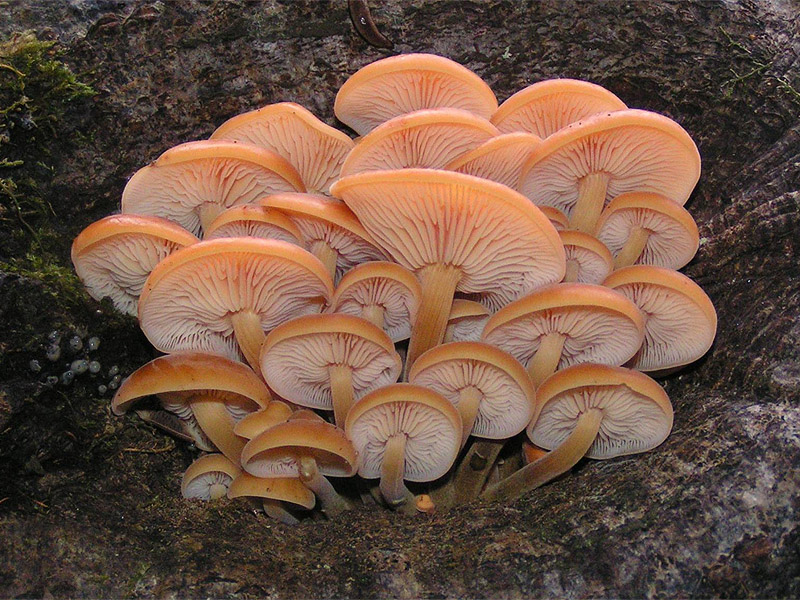
- Domed, Flat
- Stem
- Ring
- Lives by
- Breaking down dead matter, Parasite
- Season
- Autumn
- Habitat
- Dead wood, Living trees
- Spore print
- White
- Difficulty in WildGuessr
- Medium
Did you know?
- Black, bootlace-like strands carry it through soil, and a related honey fungus in Oregon covers nearly 10 square kilometres.
- Its mycelium in rotting wood can glow faintly in the dark.
Could you guess it from clues?
WildGuessr picks a secret animal, plant, fungus, stone, prehistoric creature or space object and you ask yes-or-no questions about it, such as its group or where it grows. The fewer clues you need, the more points you score.
Similar fungi
- Velvet shank
Flammulina velutipes
- Lilac bonnet
Mycena pura
- Deadly fibrecap
Inosperma erubescens

Classification, names and conservation status come from Wikidata (CC0), the photo from Wikimedia Commons. Wikidata Q473745 · All fungi · All entries