False chanterelle
Hygrophoropsis aurantiaca
Poisonous: never pick it to eat.
This is a game, not a field guide. Never eat a wild mushroom or plant because of it; if you are unsure, ask a mushroom advisor or a poison centre.
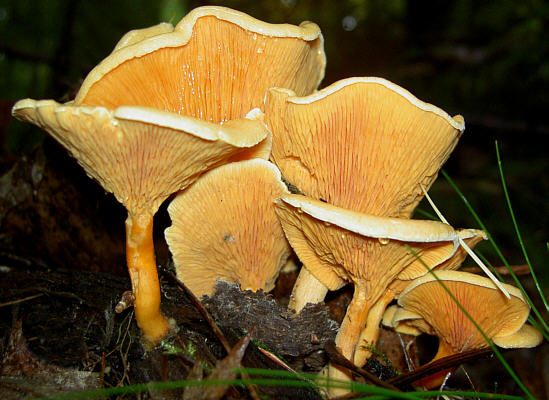
At a glance
- Scientific name
- Hygrophoropsis aurantiaca
- Class
- Agaricomycetes
- Order
- Boletales
- Family
- Hygrophoropsidaceae
- Under the cap
- Gills
- Cap
- Dipped, Funnel
- Stem
- Bare
- Lives by
- Breaking down dead matter
- Season
- Summer, Autumn
- Habitat
- Conifer forest
- Spore print
- White, Cream
- Difficulty in WildGuessr
- Hard
Did you know?
- Despite its name, DNA studies show it is not a close relative of the true chanterelles.
- It was first described in the 1780s by the Austrian naturalist Franz Xaver von Wulfen.
Could you guess it from clues?
WildGuessr picks a secret animal, plant, fungus, stone, prehistoric creature or space object and you ask yes-or-no questions about it, such as its group or where it grows. The fewer clues you need, the more points you score.
Similar fungi
- Larch bolete
Suillus grevillei
- Red capped scaber stalk
Leccinum aurantiacum
- Bitter beech bolete
Caloboletus calopus


Classification, names and conservation status come from Wikidata (CC0), the photo from Wikimedia Commons. Wikidata Q1265541 · All fungi · All entries